
Back in the day, when my goal was to set ever higher personal records for the length, width, and pitch of various couloirs a self arrest grip was standard equipment on all my ski tours. There were even a few times I carried them in-bounds.
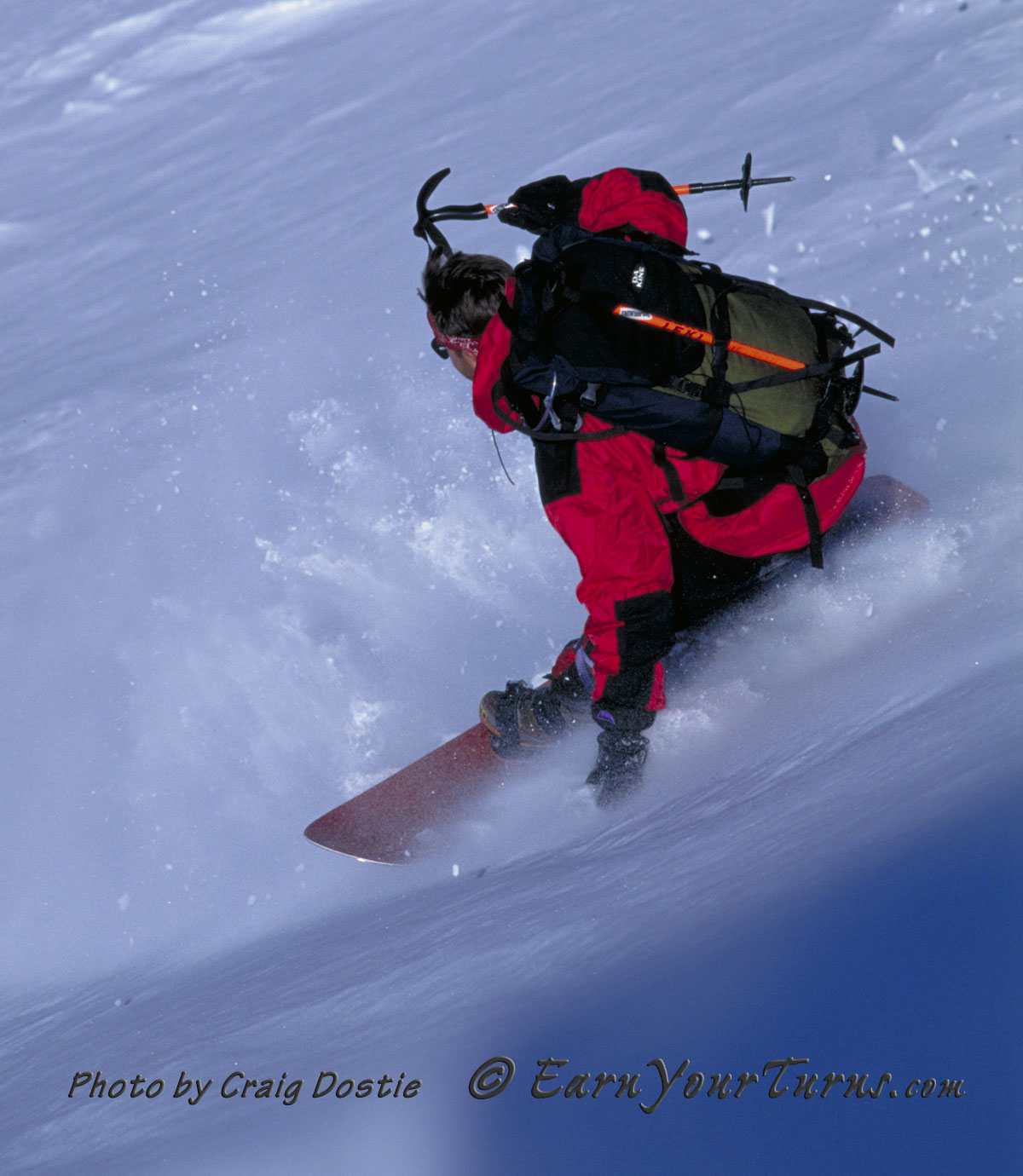
Eric Blehm descends the headwall off Mt. Jepson (San Gorgonio Wilderness) with the short lived Leki SA grip.
They actually came in handy a few times at Mammoth when I fell in the Avy Chutes off Chair 22, or on Huevos off the top. Mostly they were used as an ascent tool when climbing uncharted couloirs of styrosnow in the backcountry.
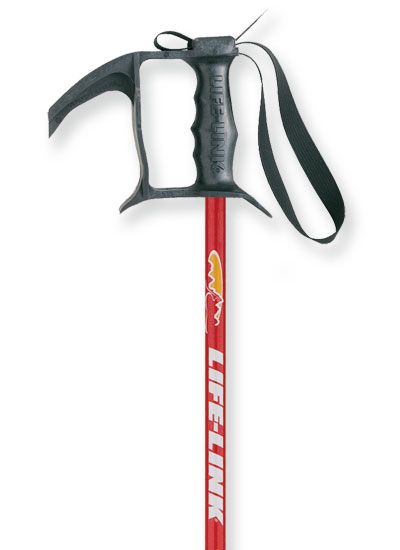
Life-Link's Claw grip.
Availablility is suspect.
My first pair were Ramer self arrest grips. Lots of people scoffed that being plastic they wouldn’t hold on real ice and I concur. Their real value wasn’t their ability to stop a slide on real ice, but as a litmus indicator while climbing. If they couldn’t punch through and help you with the climb, then perhaps the snow was no longer truly skiable and it was time to either turn around or find another descent line. Within that context, Ramer self arrest grips worked beautifully but they would not punch through and hold on dense, glazed ice. For that you needed a real ice axe made of steel. They did, however, arrest a number of blunders on steep, skiable snow.
At the time they were also the most comfortable ski grip on the market because the flat top was great for palming while skinning. The modern rounded tops on backcountry pole grips, carbon fiber shafts, and Flick-Lock™ adjustments had yet to be invented. The hooks were also good for snagging things you had dropped from your pack without having to bend over.
Paul Ramer has left us and his products are no longer available, but the classic Ramer self-arrest grip is still available on Life-Link ski poles. If you don’t attempt to ski steep black ice, this is all the arrest grip you should ever need.
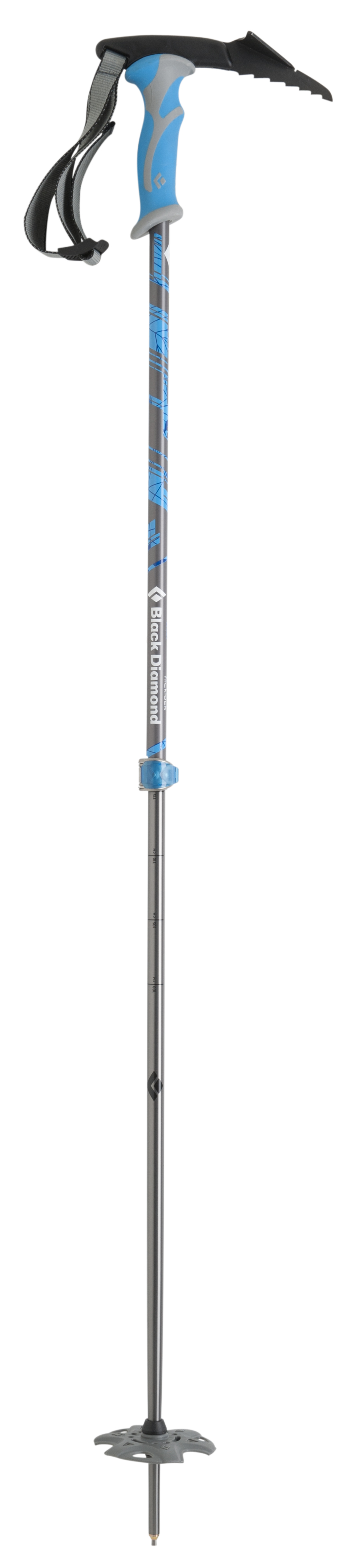
Whippet. Whip it good!
In the 90s Andrew McLegend of Wasatch Chuting Gallery fame realized he needed a self arrest grip made of metal. Not an ice axe lashed to a ski pole – but an ice axe with a shorter pick integrated into a ski pole. As a designer for Black Diamond he made it his job to develop the Whippet. About all that has changed since the original design is that the blade is no longer removable for times when you don’t really need it. Impaling yourself remains a possibility, but most folks who deem it a necessary evil for safety when skiing le extrem are also capable of not skewering themselves accidentally in less critical zones, or if they do, they don’t blame BD for their carelessness with a loaded weapon. I’ve only needed the Whippet once, but once was enough for it to prove its value. I do advise looping your wrist through the ski straps before descending no-fall zone chutes. Even if you forget like I did but hold on like your life depends on it, they will still arrest a slide unless you’re just plain unlucky.
Grivel’s Condor
There is one other self-arrest grip made, but availability is suspect. Grivel took the basic Ramer design of an enclosed grip but made the arrest pick metal and retractable. It is simple, effective, and like the Whippet, if misused, potentially lethal. Of course, that’s what makes it a safety device. 😉
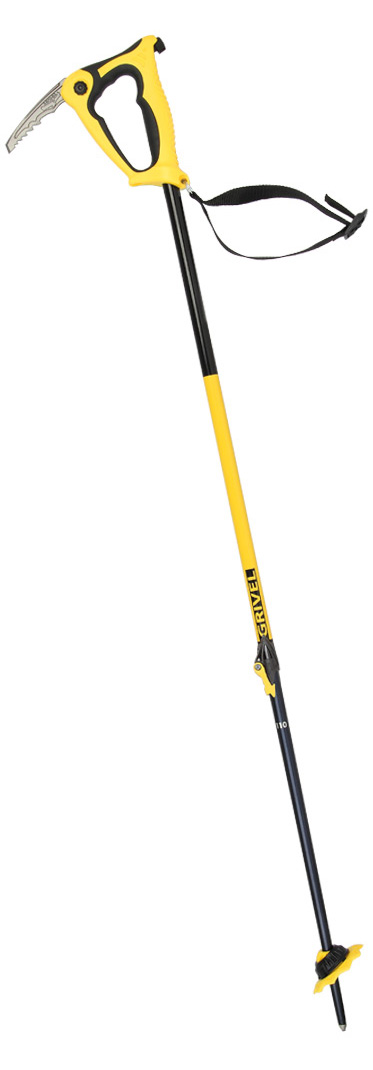
Grivel's Condor. The metal pick is retractable.
~$130
Summary
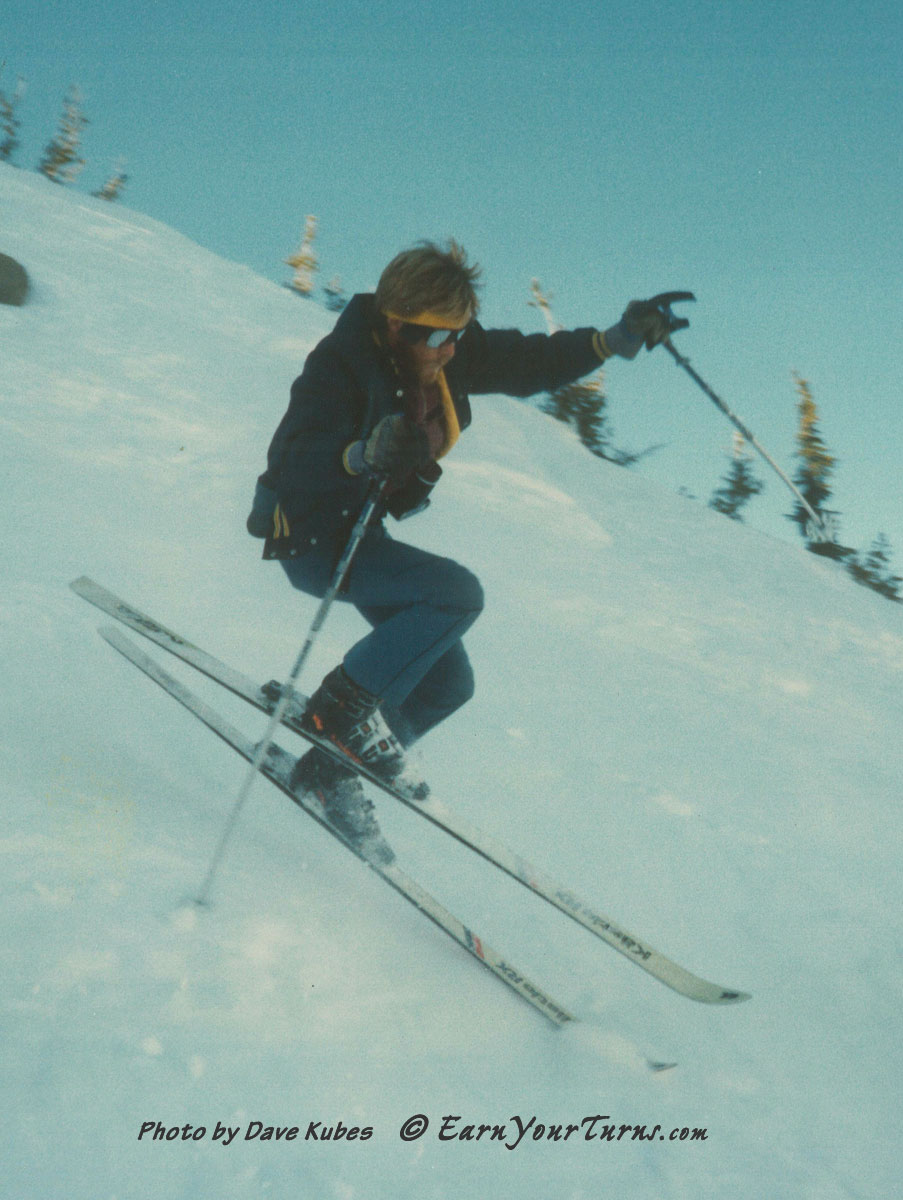
Ramer self arrest grips in hand in Avy2 at Mammoth - circa 1985
What’s your take? Do you use self arrest grips always, sometimes or never?
© 2012

8 pings
Skip to comment form